
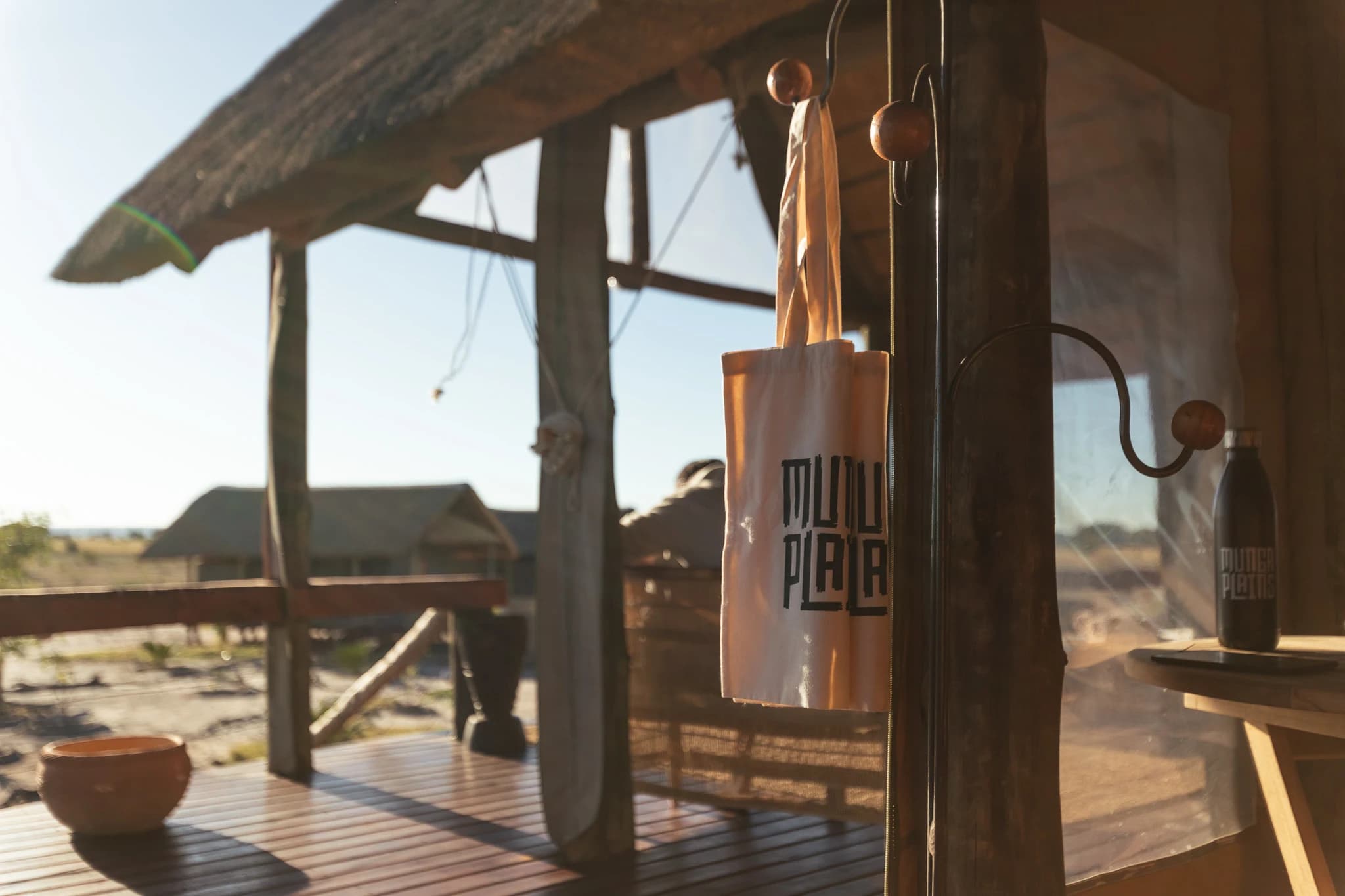
The Place
An intimate yoga retreat camp built with care and purpose.
Every piece of wood, canvas, and thatch in our camp was placed with intention, so that if it were removed tomorrow, nature could quietly reclaim the land as its own. With comfortable en-suite rooms, the camp offers an intimate setting designed for one retreat group at a time. The main area is a space for connection and community, with a bar, swimming pool, relaxed lounge areas, and a boma for gathering under the stars at night. Guided by a commitment to self-sufficiency, we grow produce from our garden, run on solar power, and source and purify our own water.
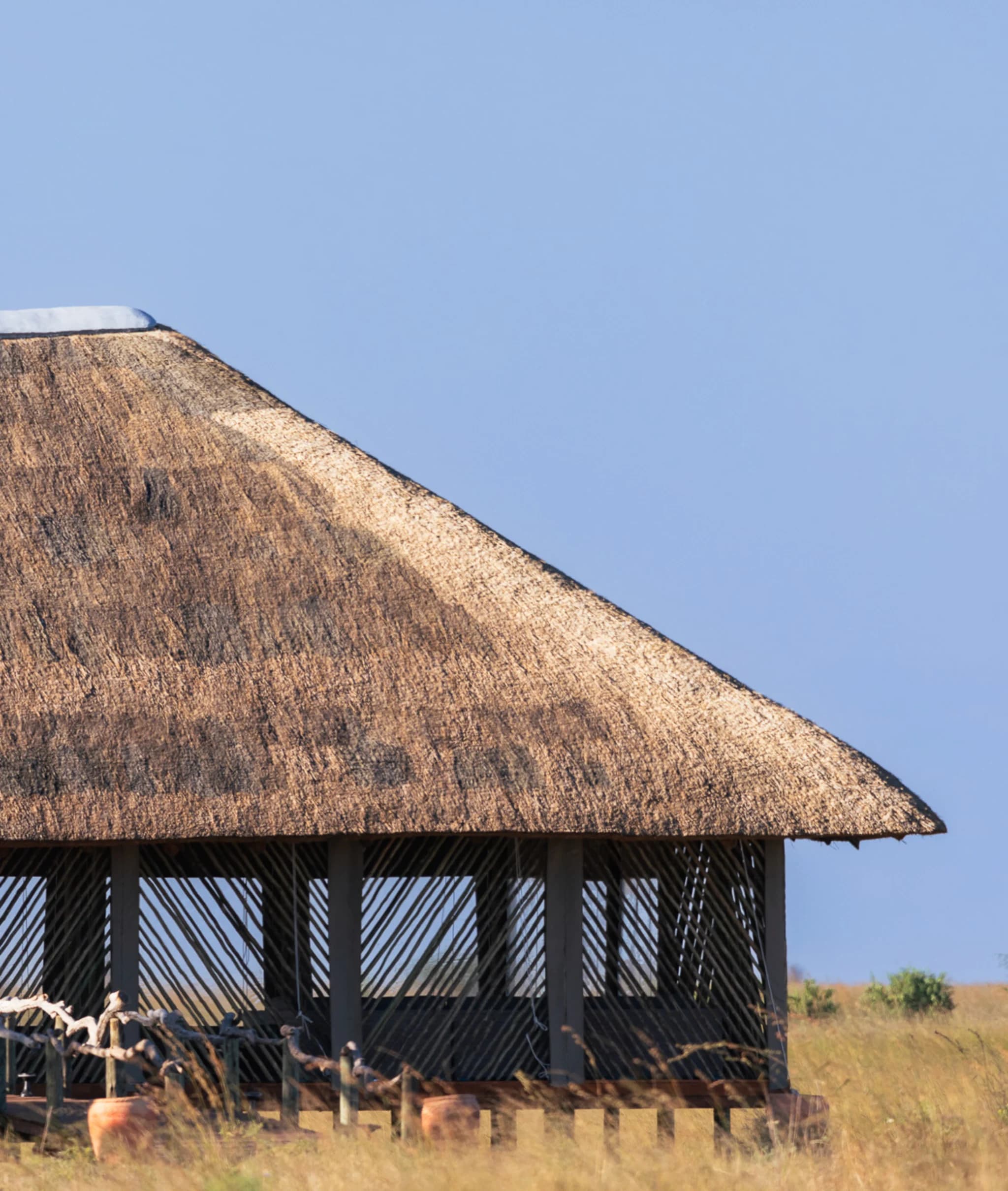
The Shala
A shala facing the savannah.
Set intentionally a short meditative walk from camp, the journey to the shala becomes part of the practice itself. Open plains stretch toward the horizon, dotted with palm trees and acacias, while wandering zebras occasionally pass through the landscape beyond.
Designed to keep you connected to nature, the shala is open to the wilderness around you. In case of wind and cooler temperatures, transparent canvas screens can be rolled down to offer protection. Fully equipped for up to 24 practitioners, the space includes mats, blocks, belts, bolsters, straps, blankets, aerial hammocks, and sound bowls. All you need to bring is your intention and your practice.
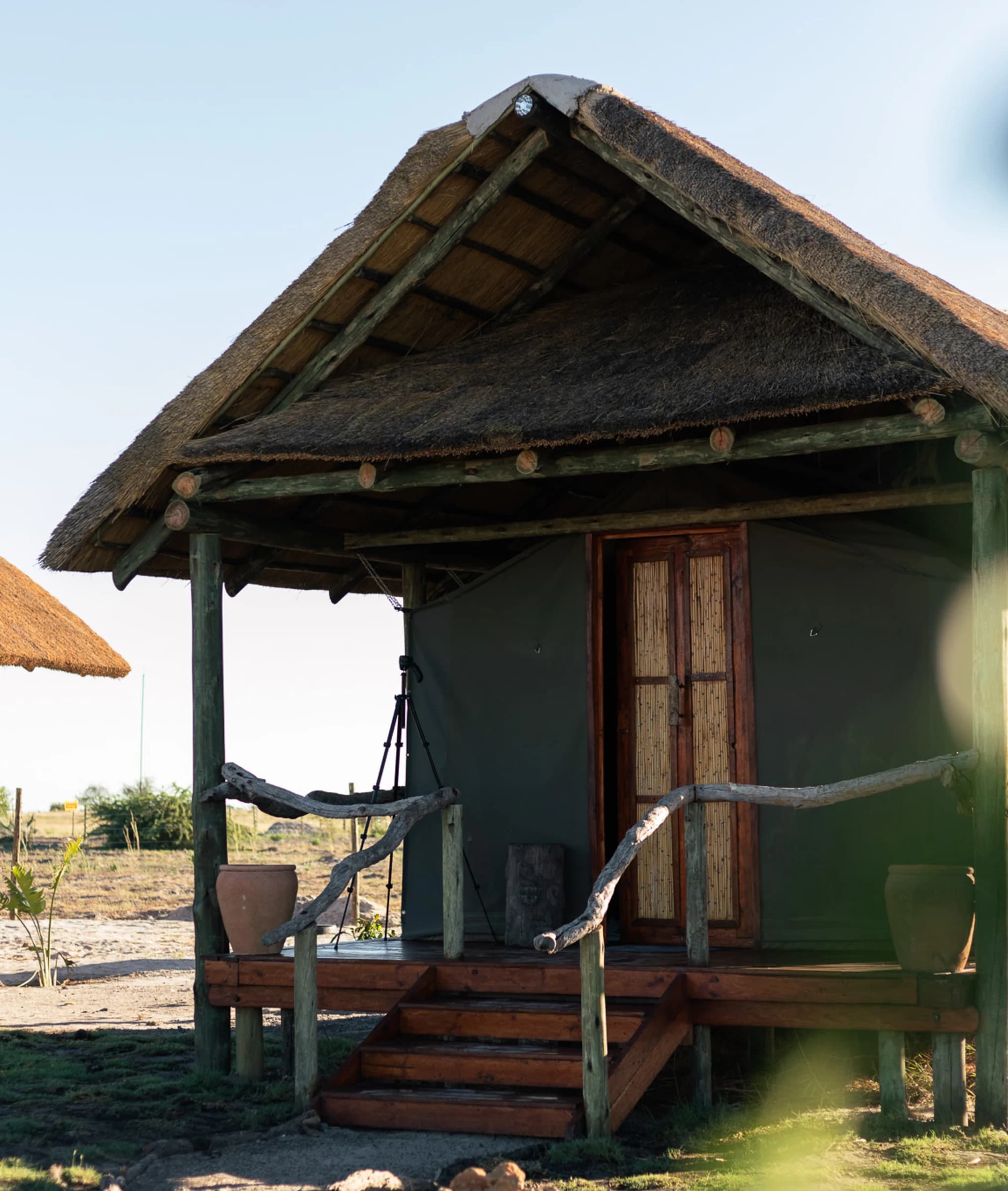
The Tented Rooms
A tent on the plains.
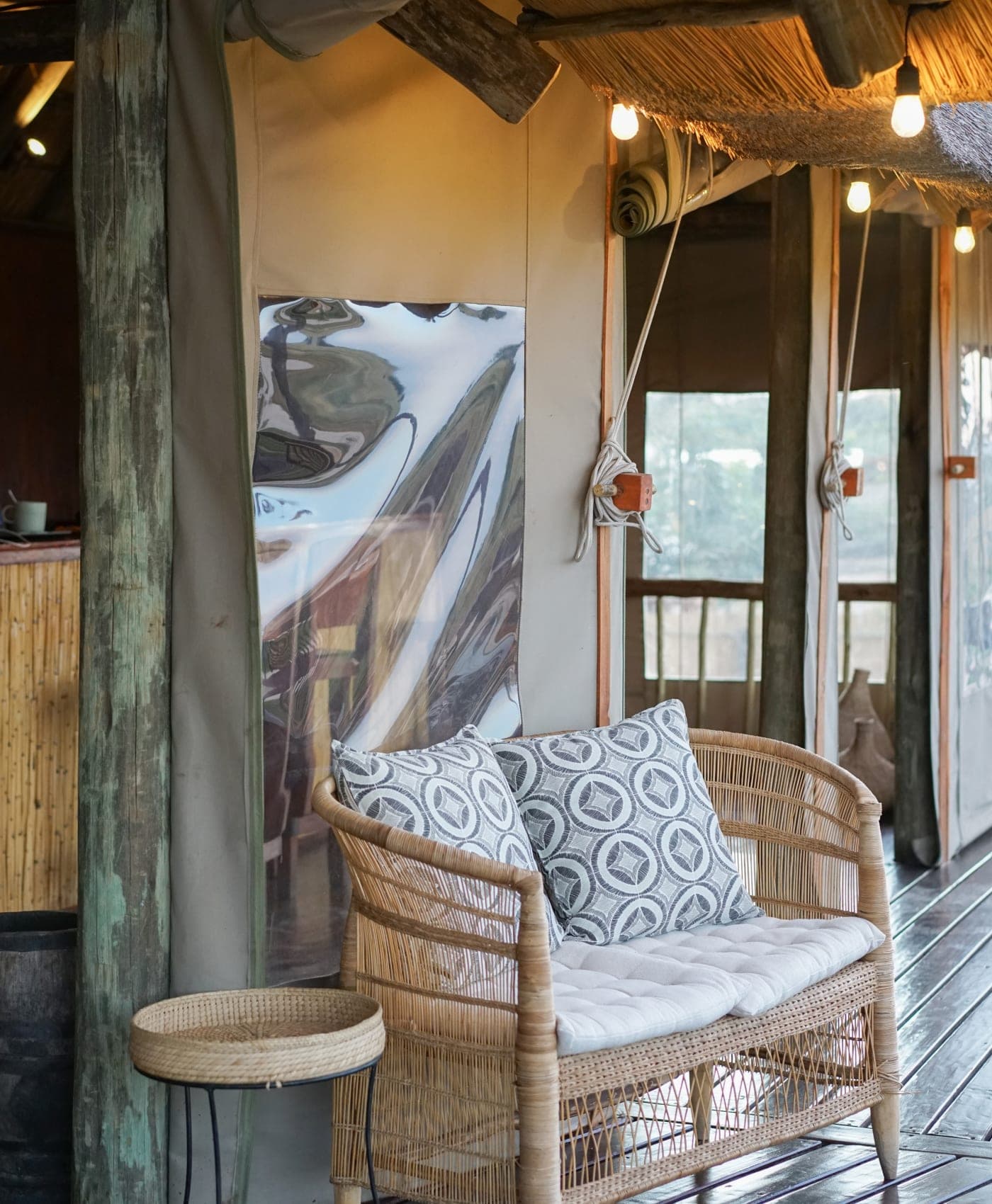
Ten beautifully finished double glamping rooms, along with two reserved for visiting retreat leaders, are each set on their own wooden deck with a private veranda. Inside, you’ll find a wardrobe, fan, mosquito net, and comfortable beds that can be configured as either king or twin.
Each tent features an en-suite bathroom with a flushing toilet and hot-water shower. By night, the soft sounds of the bush drift through the canvas, grounding you in the wilderness around you.
Inside a Tent
Take a walk through the room.
A short tour of what the inside looks like, as if you were already there.
Tap the video to play.
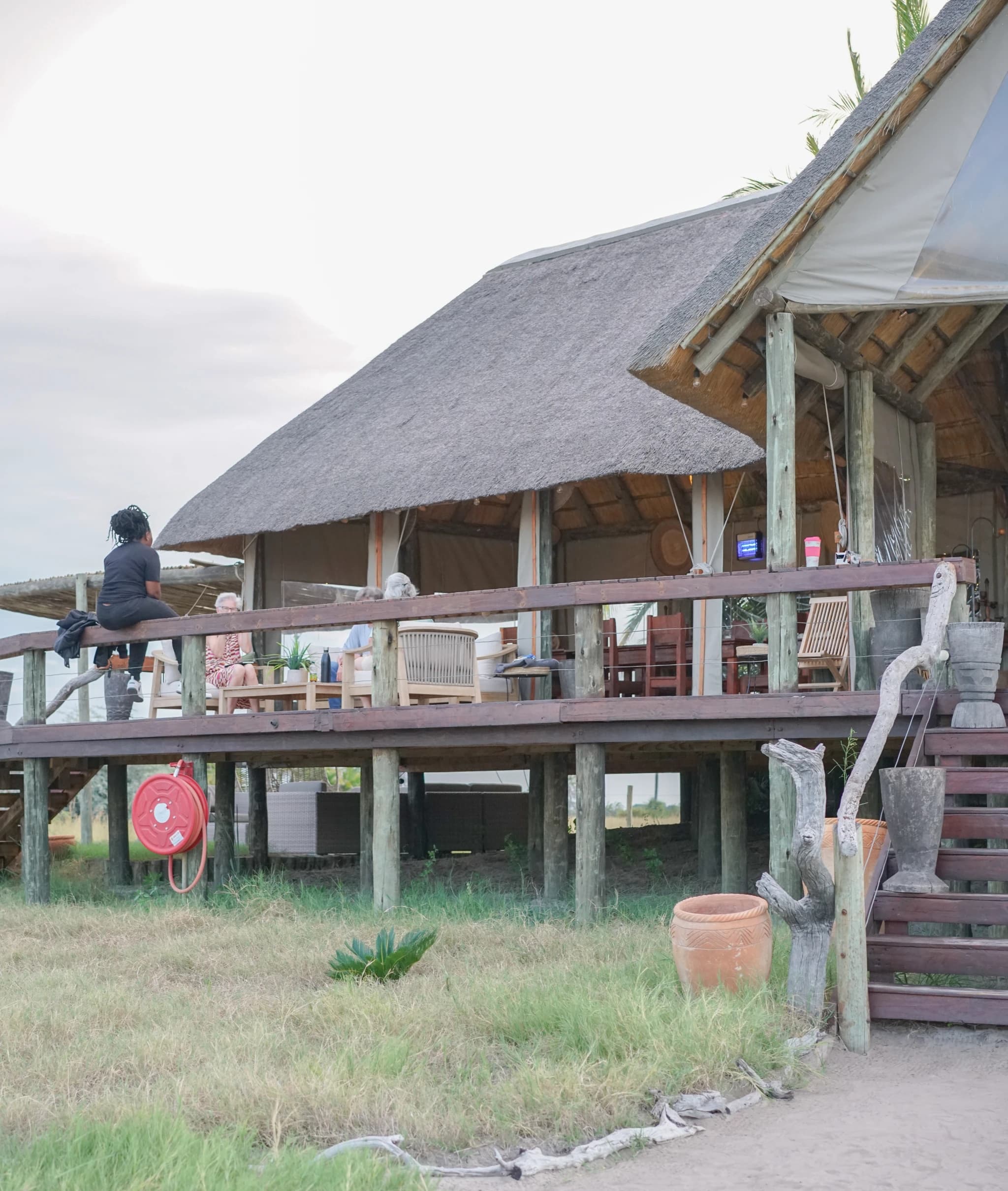
The Main Area
The heart of the camp.
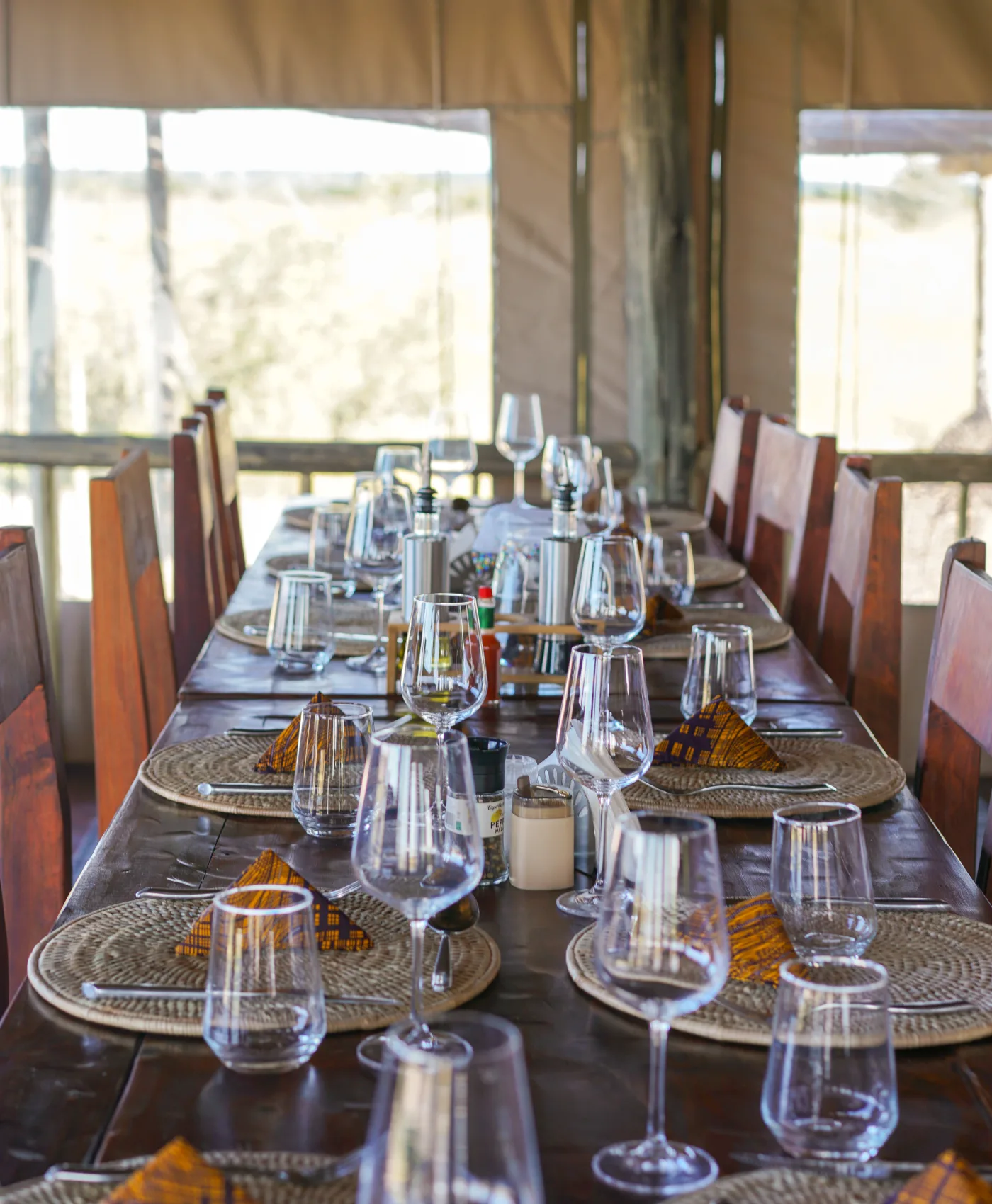
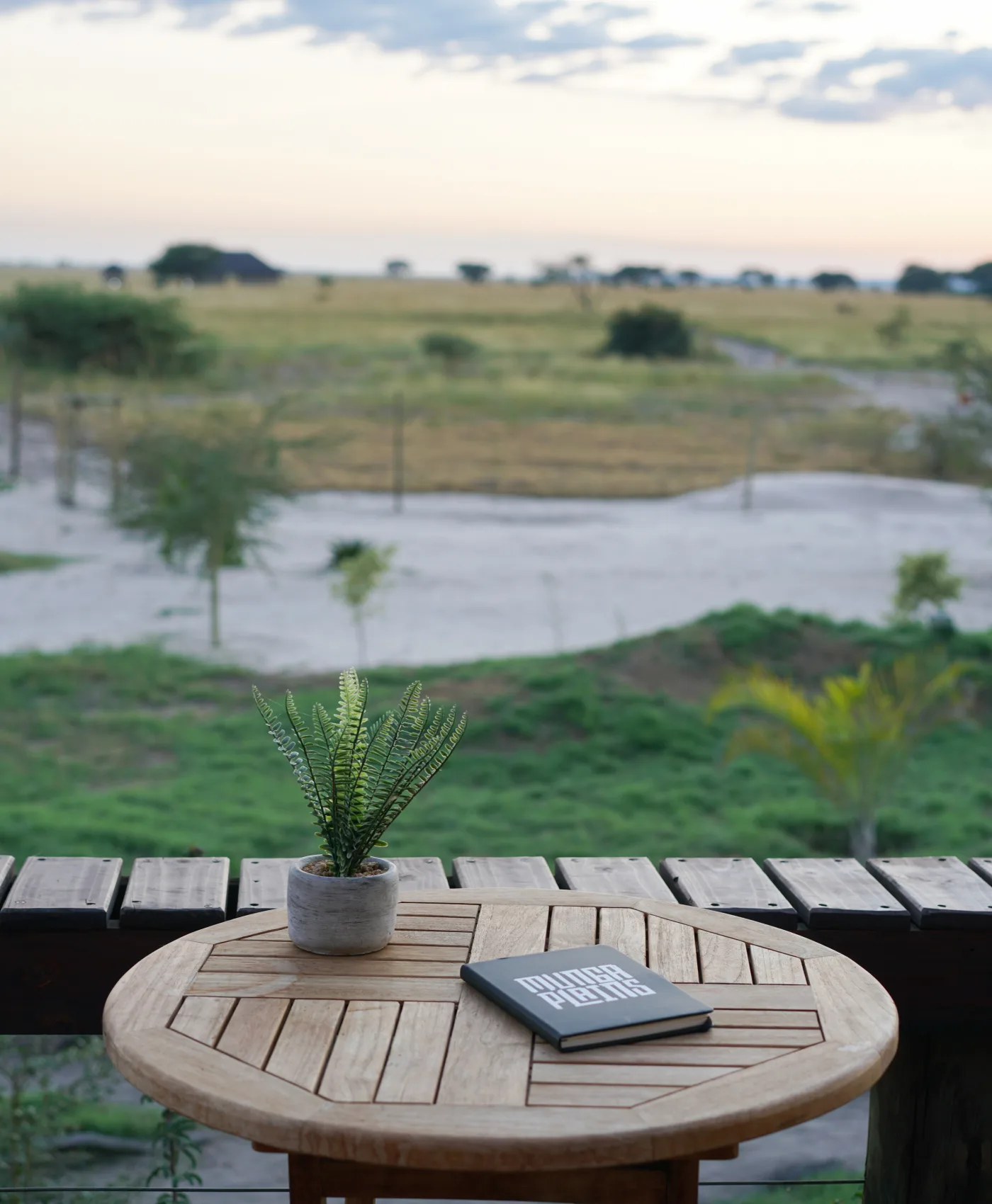
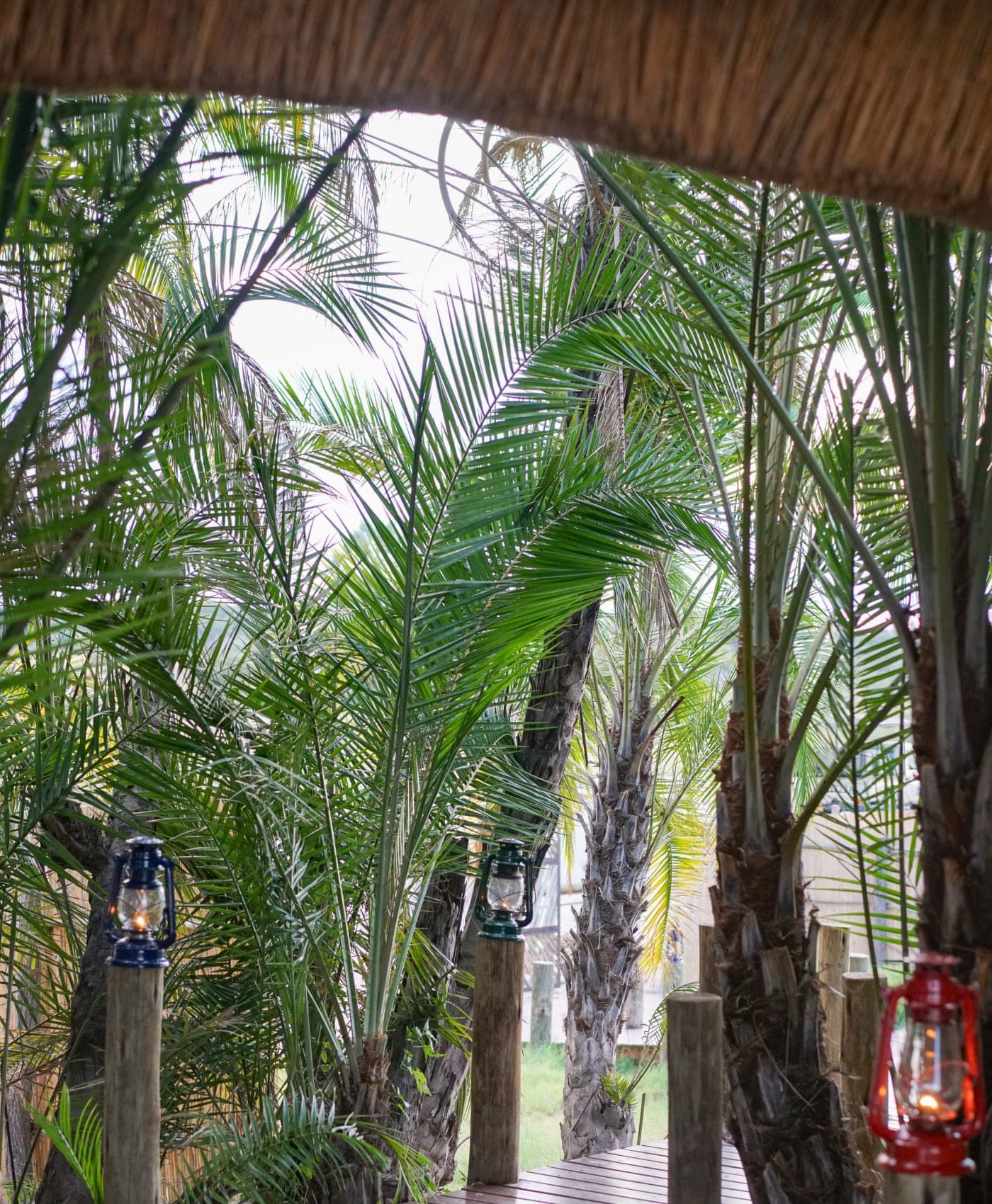
Elevated and tucked behind swaying palms, the main area is a space to gather, unwind, and take in the stillness of the plains. A bar, communal dining area, swimming pool, and relaxed lounge spaces all look out across the savannah, inviting long meals beneath the thatch and slow mornings with coffee at sunrise.
The Boma & Pool
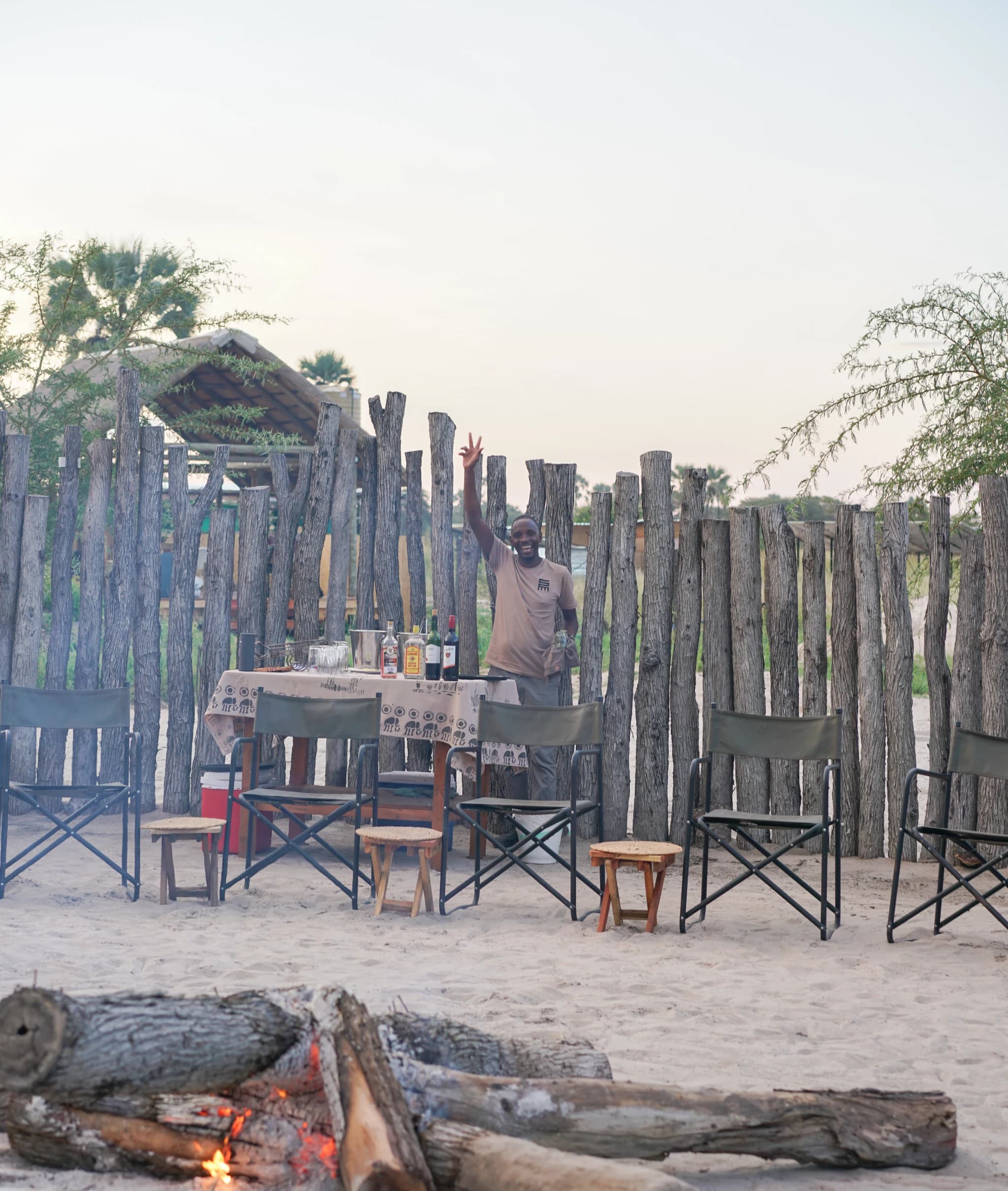
Fire at night. Water to relax.
The boma is where the camp gathers after dark. Dinner moves here on clear evenings, shared around the fire beneath the open sky, surrounded by low benches, candlelight, and the distant sounds of the bush carrying through the night.
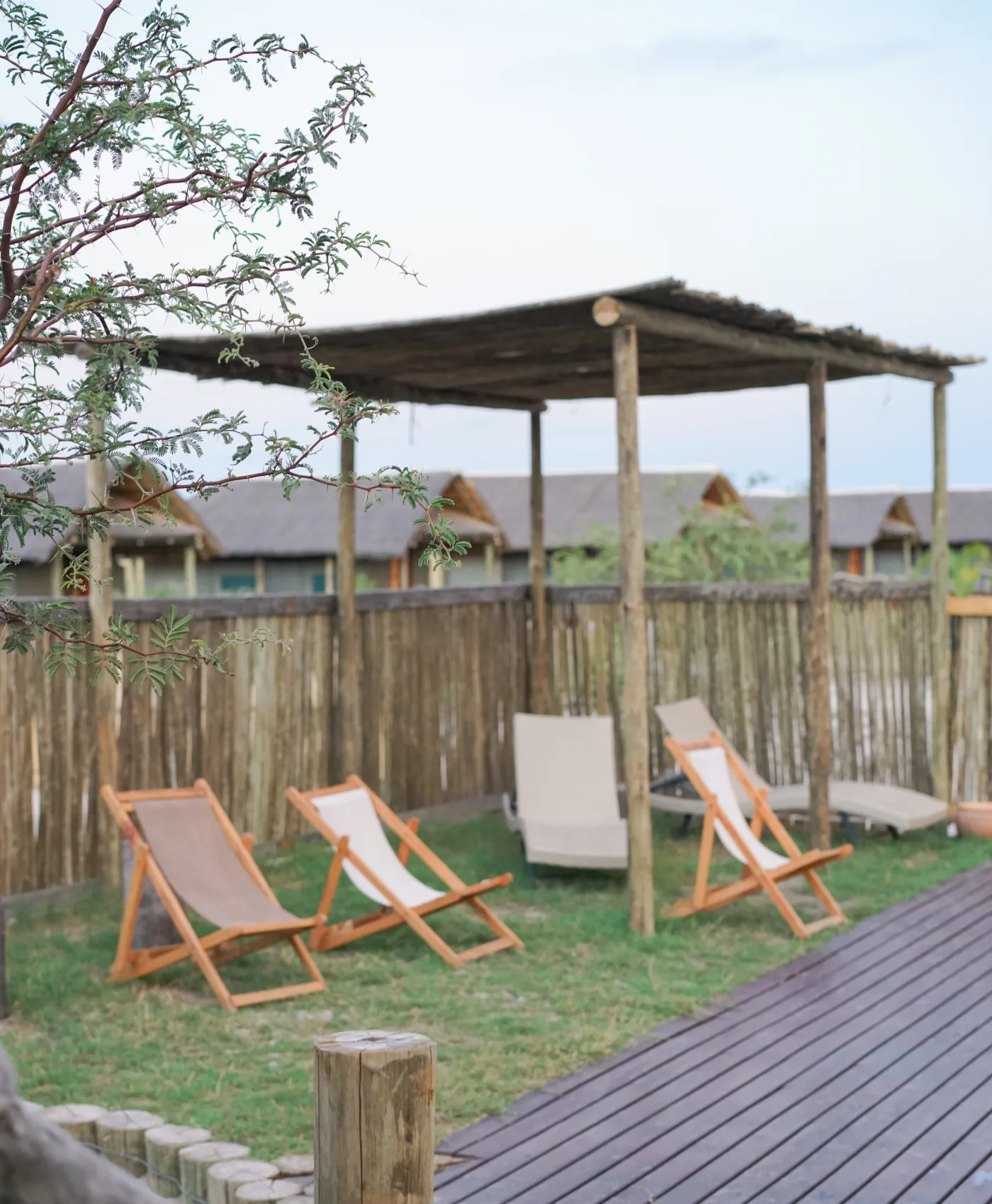
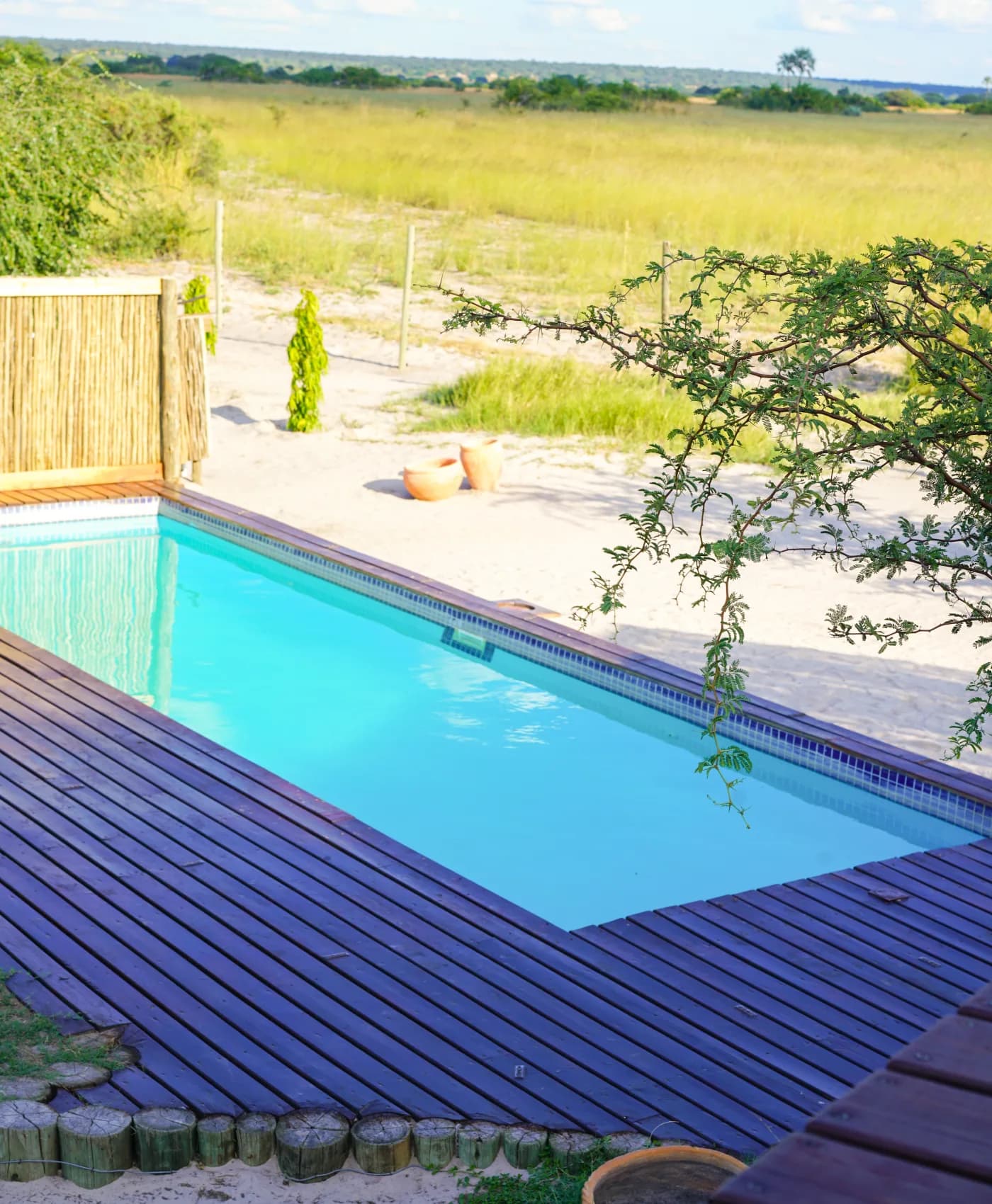
Just beyond the deck, the pool looks out across the plains. A place to cool off between practice and safari, where the stillness of the water mirrors the landscape beyond.
Around the camp
Corners we like.
How it was built
Locally sourced, hand finished.
Every structure at Munga Plains was built by local artisans in wood, canvas, and thatching grass: nothing prefabricated, nothing imposed on the landscape. Each space was created to exist gently within the plains, in rhythm with its surroundings.
Entirely off-grid, the camp is designed to exist lightly on the land. Water is sourced from our own borehole, with on-site water and sewage treatment systems. Solar power sustains the camp’s daily rhythm. Thoughtfully built to be self-sufficient, the camp cares for itself without leaving a lasting mark on the plains.
Capacity
Numbers at a glance.
Guests
Up to 24
The camp is privatized for one group at a time. We host the whole retreat end to end.
Rooms
12 tented rooms
Comfortable hand finished glamping rooms, double or twin, with en-suite bathroom and hot-water shower welcome you after a long day and let you hear the sounds of the wild at night.
Shala
24-mat capacity
Fully equipped, including aerial yoga hammocks and crystal sound bowls. Beautifully set in the middle of the savannah.
Team on site
25 local staff
Guides, chefs, housekeepers, maintenance, and more, all living on site as a big family. Most come from the neighboring villages, allowing them to go home on days off.
Keep reading
- See what a week on retreat looks like
Morning practice, safari, cultural workshops, and dinner around the fire.
- Find where the camp is and how to reach it
Northern Botswana, about three hours by road from Victoria Falls Airport.
- Host your own retreat at the camp
Bring your group. We run transfers, safaris, meals and logistics.