
Where we are
Chobe, Botswana.
In the north of Botswana, where four African countries meet, the region offers a rare sense of remoteness while remaining rich in wildlife and relatively untouched by mass tourism. Around three hours by road from Victoria Falls Airport, the camp is perfectly positioned for those wanting to combine the retreat experience with a visit to Victoria Falls.
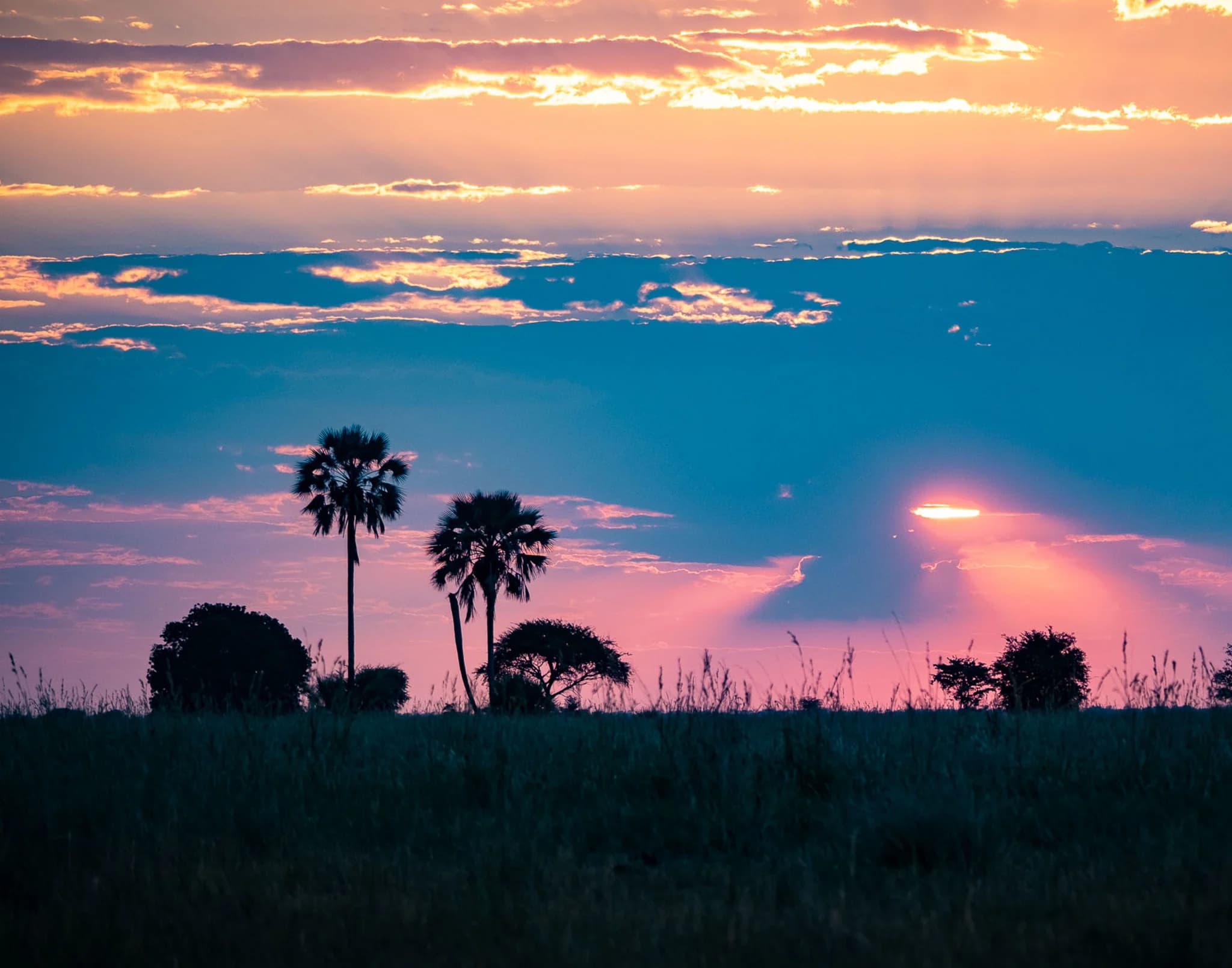
The Setting
Plains to the horizon.
The shala faces open plains that stretch uninterrupted to the horizon, flooding seasonally as the landscape shifts with the rhythm of the water. At sunrise and sunset, palm trees cast long shadows across the grasslands. The bush extends endlessly in every direction beyond.
Our nearest village is Kavimba, just a few kilometers away. The camp sits on Basubiya tribal land. For many of our staff, this landscape is not only where they work, but where they call home.
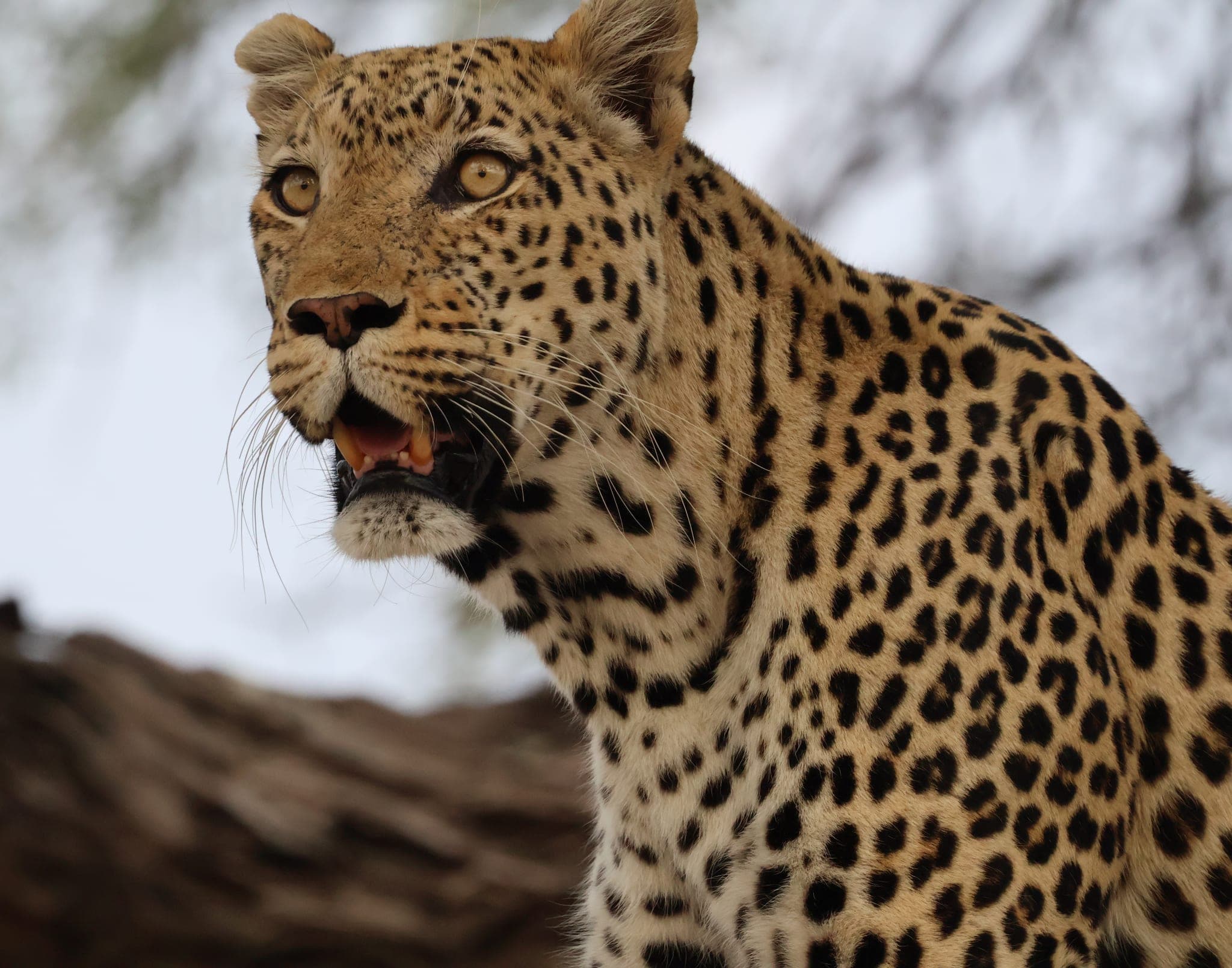
The Park
Leopards, lions, and cheetahs together.
Chobe National Park is one of the few places in Africa where the continent’s great predators share the same terrain. Leopards move through the riverine forests, lion prides follow elephant herds across the bush, cheetahs roam the open plains, and caracals emerge quietly at dusk.
Our retreats focus on the Chobe Riverfront along the Namibian border, where game drives and boat cruises offer remarkable wildlife encounters throughout the year.
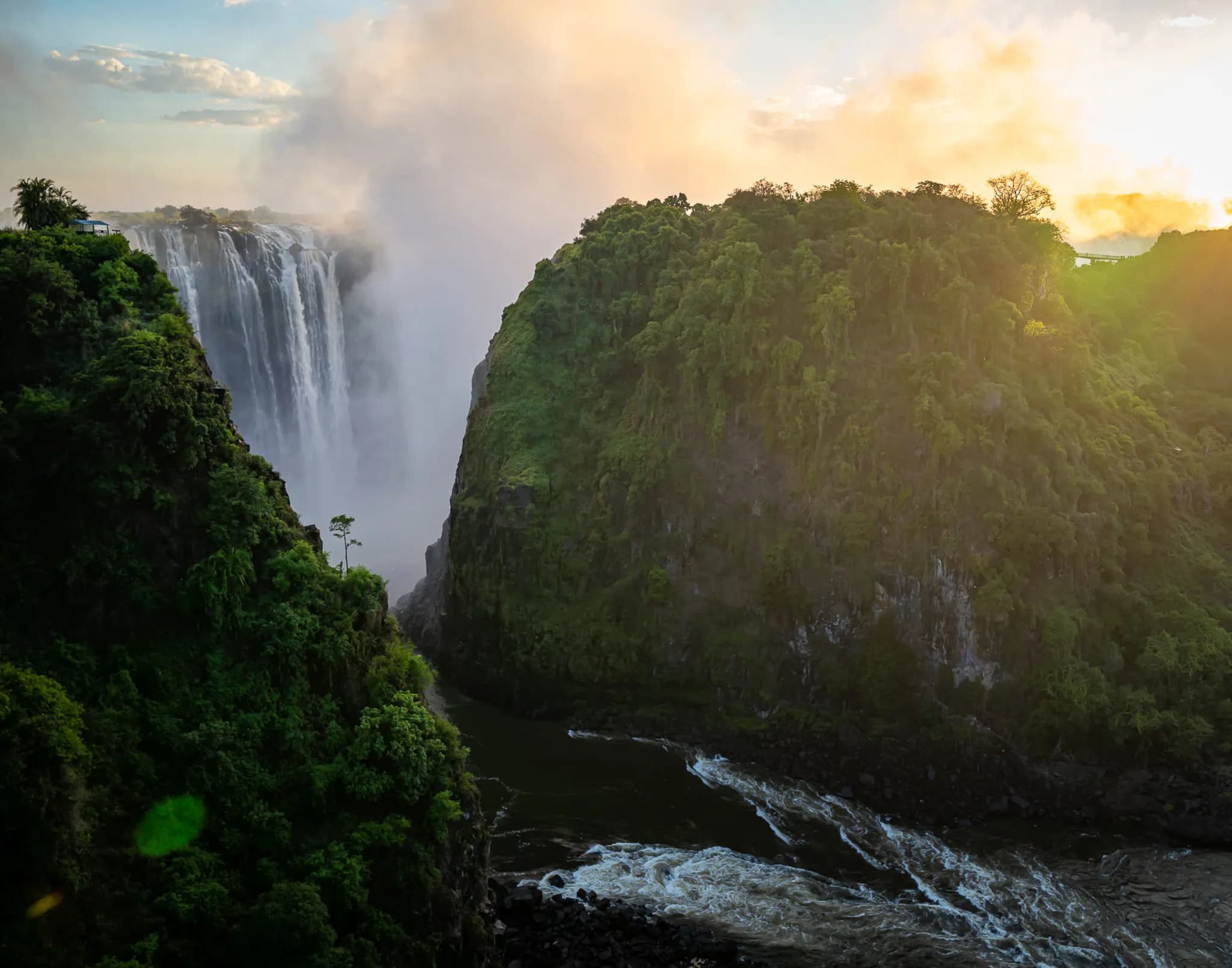
The Gateway
Arrive via Mosi-oa-Tunya.
Mosi-oa-Tunya, meaning “The Smoke That Thunders” in the local Lozi language, describes the immense spray rising from Victoria Falls, visible from kilometers away. Later renamed by David Livingstone in honor of Queen Victoria, the falls have since drawn visitors from around the world.
As one of the Seven Natural Wonders of the World, it is the closest major landmark to camp. Enjoy guided walks along the falls, scenic helicopter flights above the gorge, or sunset cruises along the upper Zambezi River.
Getting Here
Airport to camp, with us.
Most retreats open with a night or two at Victoria Falls before continuing into Botswana. From arrival to your final farewell, we take care of the entire journey.
Fly to Victoria Falls or Kasane
Most guests arrive through Victoria Falls Airport. Kasane Airport in Botswana offers a closer alternative. Direct flights are available from cities including Johannesburg, Cape Town, Nairobi, and Addis Ababa.
A night or two at Victoria Falls
Upon arrival, we welcome guests and transfer them to a partner lodge where the group gathers as the retreat begins. It is a chance to settle in, rest, and arrive slowly into the experience.
Transfer to Munga Plains
The journey to camp takes about three hours by road via Kasane, including all transfers and border crossings arranged by our team. A boat cruise along the Chobe River is included en route, offering a gentle transition into the rhythm of the bush. Arrive at camp in time for dinner and a restful night’s sleep.
Practicals
Visas, seasons, health.
Visa
Most nationalities visa-free
Many travelers, including holders of US, EU, UK, and Commonwealth passports, receive a free 90-day visa on arrival in Botswana. Entry into Zimbabwe requires a visa, which can typically be obtained online in advance for a small fee.
When we operate
March to December
Retreats run for ten months of the year. The camp closes from mid-December through the end of February during the height of the wet season and for annual maintenance.
Weather
Green, then dry
From May to October, the dry season brings cool nights, warm days, and exceptional wildlife viewing near the river. The shoulder months, March, April, November, and December, offer short afternoon rains, dramatic skies, and the arrival of migratory birds.
Currency
Botswana Pula
US dollars are widely accepted throughout Botswana and Victoria Falls. Cash is recommended for souvenirs, small purchases, and gratuities for staff and guides.
Keep reading
- Read about Chobe National Park
Botswana's first national park, and the camp's nearest neighbor.
- Start at Victoria Falls
Most retreats open with a night or two at Mosi-oa-Tunya.
- See the camp itself
Tented rooms, the shala, the pool and the boma.